All Stories
9 min

7 solutions that make the warehouse safer

Working with forklifts weighing several tons often creates hazardous situations. There are now many innovative assistance systems available to protect people, goods, and the environment.

2025-12-17

Dennis Lüneburger

Many accidents involving forklifts have similar causes, such as poor visibility when reversing. Our Linde MH brand has solutions and assistance systems for almost every hazardous situation in the warehouse – here are a few of them.

According to estimates by the US Occupational Safety and Health Administration (OSHA), there are around 35,000 to 62,000 injury-related accidents involving forklifts in the United States every year. Some of these result in serious injuries and even fatalities. One thing is clear: every accident is one too many – and we at the KION Group do our utmost to make working with our brands' products as safe as possible.

Safety is a key focus throughout our entire group – as part of a sustainable corporate strategy. "At the KION Group, we see safety as a core part of our responsibility – to our employees, our customers, and society," says David Krecman, Senior Manager HSE at KION Group Sustainability & HSE. "Our goal is to create working environments where technology protects people – not the other way around."

Our Linde Material Handling brand relies on a holistic safety concept that puts people at the center and builds on intelligent technologies, preventive training, and data-based transparency. In this article, we highlight seven of the most common accident risks involving forklifts—and explain how Linde MH is effectively counteracting them with modern assistance systems and digital solutions.

1) Reversing is risk no. 1 – enforce visibility, combine systems

Problem:

Reversing is the most common cause of accidents in warehouses. Blind spots at the rear or sides, narrow aisles, and confusing intersections make the situation particularly dangerous. Drivers often overlook people, pallets, or rack components—sometimes with serious consequences. When reversing, a fraction of a second often determines whether there will be a near-miss or a collision.

Solution:

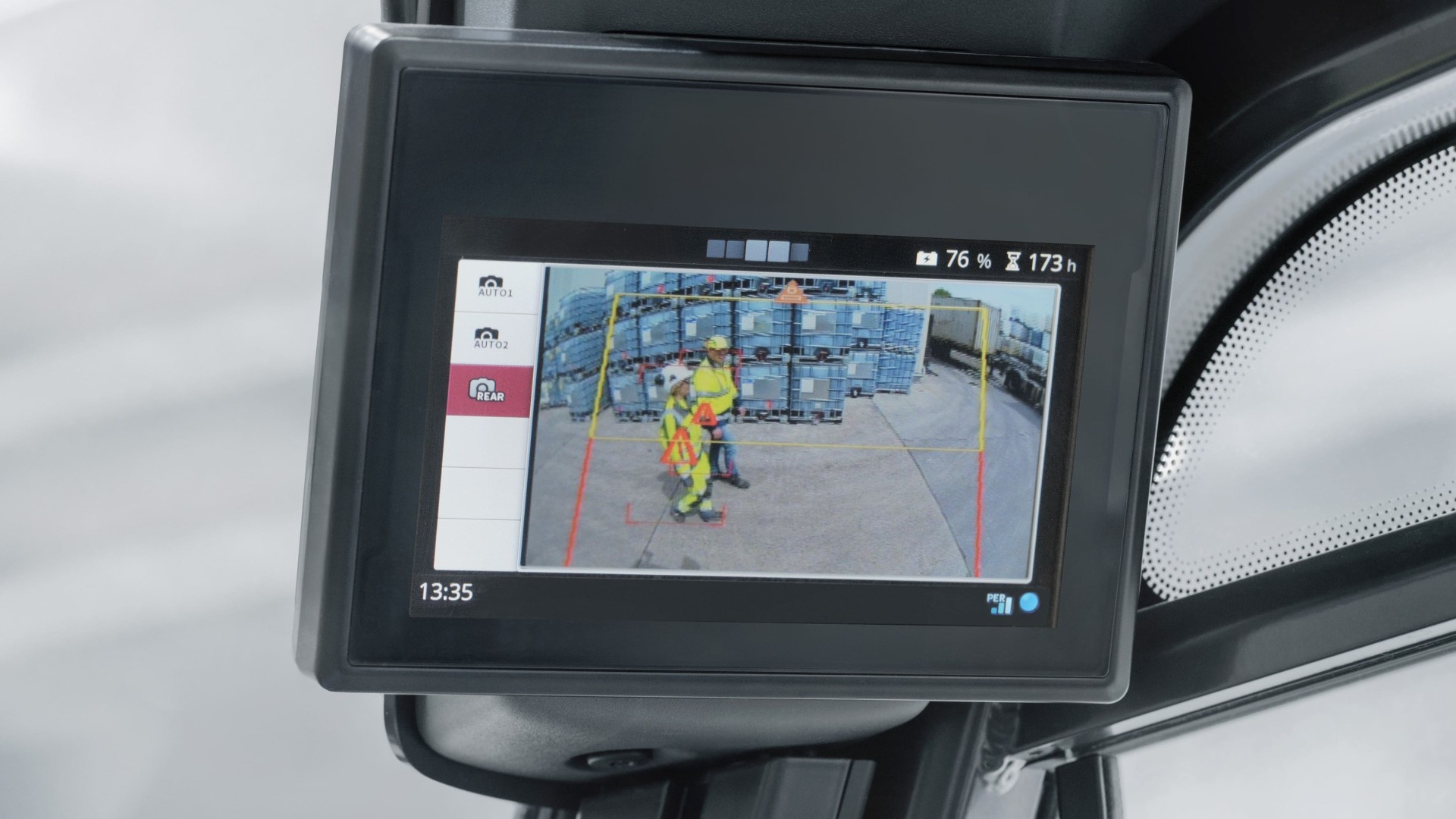
Linde Material Handling addresses this risk with a multi-level safety strategy consisting of several combinable systems. The basis is a reverse handle with an integrated release button that forces the driver to turn around and thus encourages them to look over their shoulder. In addition, the Linde Reverse Assist Camera provides a wide view to the rear. The AI-based camera solution detects people in the path of travel and actively intervenes in the forklift's driving behavior, for example through automatic warnings or braking maneuvers. This offers a high level of safety, especially when maneuvering in narrow aisles.

One screen, many application scenarios: the Linde Reverse Assist Camera

The AI-based Linde Reverse Assist Radar solution not only detects people but also obstacles such as pallets or racks, actively follows the "driving path" when steering, and can automatically brake the vehicle to a standstill in case of danger. "When reversing, every second counts and visibility is crucial. Our systems are not designed to patronize the driver, but to support them – precisely, predictably, and without false alarms," explains Tobias Klein, Senior Strategy & Portfolio Manager Safety & Digital Solutions at Linde MH.

All systems are modular, retrofittable, and can be used independently of the warehouse environment. This allows the driver to remain alert – and receive support exactly when it matters.

2) Preventing foot injuries – with the Linde Active Foot Bumper

Problem:

Foot injuries are among the most common everyday accidents in intralogistics – especially when using electric pallet trucks. Even minor carelessness when maneuvering or narrow aisles are enough to cause crush injuries. Such injuries often lead to painful injuries and long downtimes. Yet they are easily preventable!

Solution:

This is where the Linde Active Foot Bumper from Linde MH comes in. The system detects pressure or contact at the front of the vehicle, stops the pallet truck immediately, and – if desired – automatically reverses a short distance. A simple but extremely effective measure that can also be retrofitted.

"An active protective strip can drastically reduce the risk of foot injuries – without the operator having to constantly think about the technology," explains David Krecman, Senior Manager HSE at KION Group Sustainability & HSE. Especially in areas with a lot of foot traffic, the solution shows how simple technology can make a big difference.

3) Detecting damage before it causes problems

Problem:

Collision damage to gates, bollards, or racks is one of the most common types of property damage in warehouses. It causes high repair costs, jeopardizes the stability of the infrastructure, and, in the worst case, can lead to racks collapsing or serious injuries. What makes this particularly treacherous is that many minor collisions go unnoticed or are not reported – the actual danger often only becomes apparent later, when inconspicuous deformations or hairline cracks gradually reduce the load-bearing capacity of a shelf support. If the component is then subjected to further stress, it can suddenly fail – usually without warning.

Solution:

Linde shock sensors provide transparency here. They record every impact by a vehicle and transmit the data directly to the myLinde customer portal via vehicle telematics – including a time stamp, vehicle and driver reference. This makes every incident traceable and provides a basis for targeted measures. In the event of serious collisions, the vehicle can automatically switch to creep mode until technical clearance is given.

The more data available, the more complete the safety picture in the warehouse.

The digital Linde departure check offers additional safety: at the start of the shift, the driver checks the vehicle digitally via an app or the display installed in the vehicle. If defects are found, the device remains locked until the workshop gives its approval. "Transparency is key. When a crash not only happens but is also documented, we can learn from it and take targeted action," emphasizes David Krecman, Senior Manager HSE at KION Group Sustainability & HSE. This is how Linde MH ensures that only technically sound vehicles are in use – and that every incident contributes to improvement.

4) Only those who are authorized can drive: access control via RFID or PIN

Problem/risk:

The use of vehicles by unauthorized persons or inadequately trained drivers is a frequently underestimated safety risk. When forklifts or pallet trucks are operated by unauthorized persons, the risk of accidents increases significantly—especially in multi-shift operations where many employees use the same fleet. Incorrect operation not only causes damage to the vehicle and goods, but also endangers colleagues in the vicinity.

Solution:

The Linde Access Control System regulates vehicle access digitally – via RFID card or PIN entry. Only trained and approved drivers can start the vehicle. Driver rights are managed centrally and clearly via the myLinde customer portal. This ensures that everyone only has access to the vehicles for which they are authorized and trained.

"In multi-shift operations in particular, there are clear rules about who is allowed to use which vehicle and when. Digital access control is a must today – and it also promotes a greater sense of responsibility," explains Tobias Klein, Senior Strategy & Portfolio Manager Safety & Digital Solutions at Linde MH.

5) Load, height, risk of tipping – Linde Safety Pilot & Linde Load Assist intervene

Problem/risk:

Tipping accidents are among the most serious risks in intralogistics. They usually occur when heavy loads are moved at great heights or transported at excessive speeds. Even slight deviations in the load center of gravity or uneven floors can be enough to cause the vehicle to tip over. In addition to personal injury, such accidents often result in significant property damage and long downtimes.

Solution:

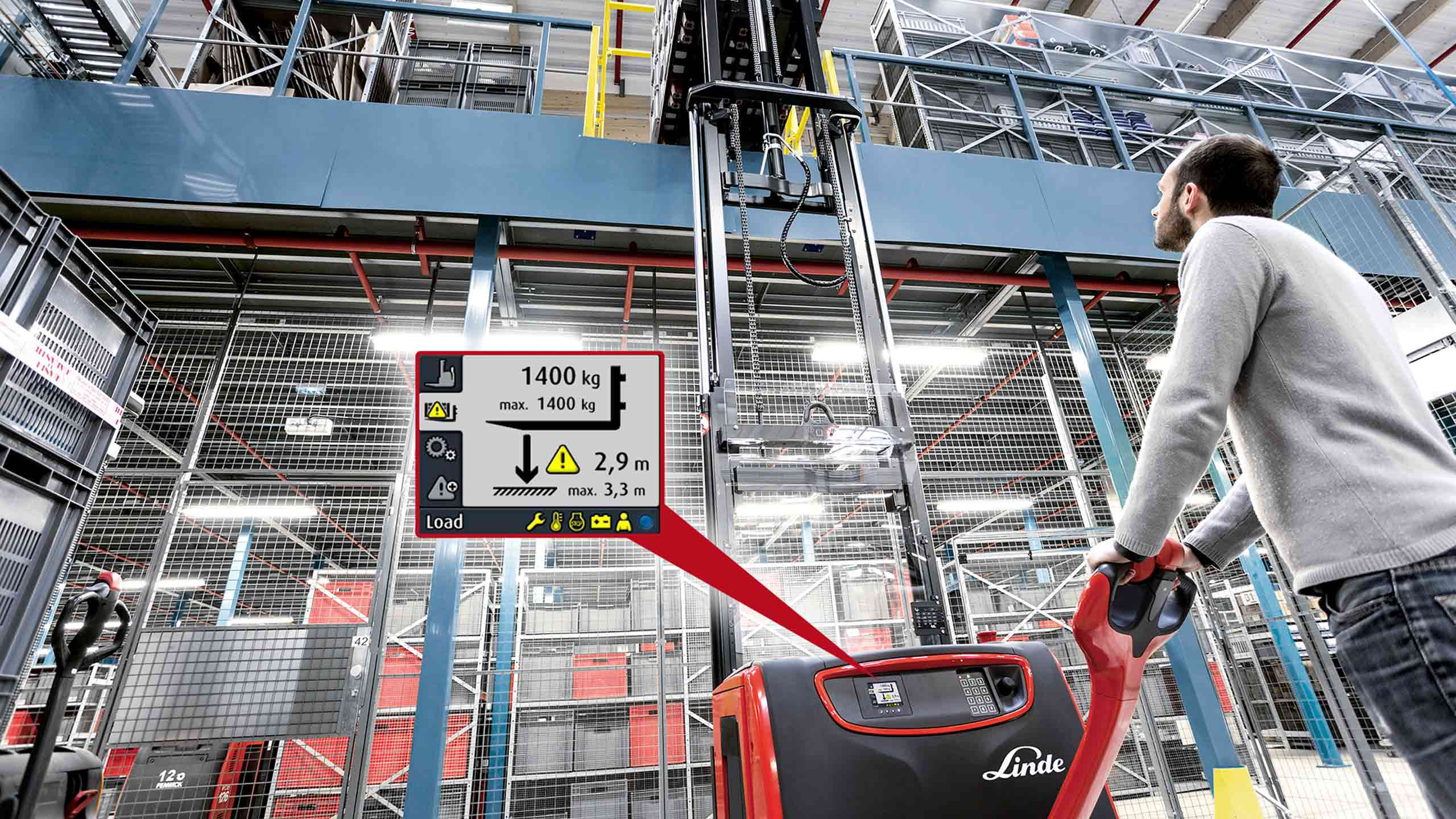
With Linde Load Assist and Linde Safety Pilot, which are installed as standard in many forklifts, Linde MH relies on intelligent driver assistance systems that make physical limits visible – before they become critical. Linde Load Assist calculates the safe lifting speed and forward tilt for the current load in real time. Linde Safety Pilot goes even further: it monitors the load center of gravity, lift height, and driving speed and actively intervenes in the driving and lifting behavior as soon as the vehicle threatens to become unstable. The driver receives all relevant safety data—such as maximum lift height or residual load capacity—directly on the display.

In narrow-aisle warehouses, Linde Dynamic Mast Control (DMC) provides additional stability by automatically compensating for mast oscillations and enabling precise work even at great heights. "Today's technology can make physical limits visible before they become critical. Systems such as the Linde Safety Pilot bring safety and productivity into harmony," emphasizes Tobias Klein, Senior Strategy & Portfolio Manager Safety & Digital Solutions at Linde MH.

If you want to reach new heights, you need the Linde Safety Pilot.

6) Controlling speed and mixed traffic – Linde Safety Guard

Problem/risk:

In many warehouses, pedestrians and industrial trucks share the same space. The risk of collisions and near misses increases significantly, especially at intersections, in narrow aisles, or at high speeds. Clear traffic rules or sufficient visibility of crossings are often lacking – and even a moment of inattention can be dangerous.

Solution:

Linde Material Handling addresses this risk with the Linde Safety Guard real-time warning system. It defines virtual warning and speed zones. It reliably detects people and vehicles – even through walls or racks – and automatically reduces speed when people and machines come too close to each other. "Creating safety standards is not a one-off project. Linde Safety Guard secures the moment and facilitates preventive safety," explains David Krecman, Senior Manager HSE at KION Group Sustainability & HSE. This creates greater safety in day-to-day operations in the short term – and a sustainable, preventive safety culture in the long term.

7) Making data visible – from near misses to hotspot maps

Problem/risk:

In the hectic everyday life of a warehouse, many safety-related situations sometimes go unnoticed: near collisions, sudden braking maneuvers, or dangerous bottlenecks. Without systematic recording, valuable information that could help prevent future accidents is lost. Transparency, on the other hand, helps to identify patterns of danger and take targeted countermeasures.

Solution:

Linde Material Handling reads the vehicle's safety data—such as emergency braking and warning messages from the Linde Safety Guard—and compiles it centrally in the myLinde customer portal. There, fleet and safety managers can evaluate near-miss statistics and derive targeted measures. In the future, these events will also be visible on a digital warehouse map using Linde MH's RTLS+ (Real-Time Localization System): Hotspots can thus be spatially assigned and specifically defused.

"When we bring together data from all sources, we suddenly see patterns. These insights lead to real prevention – no longer just reaction," says Tobias Klein, Senior Strategy & Portfolio Manager Safety & Digital Solutions at Linde MH. The result is a continuous cycle of identification, analysis, and improvement – safety becomes measurable, controllable, and plannable.

FAQ: Safety in the warehouse – what you need to know

1. What are the most common causes of accidents in warehouses?

Most accidents are caused by restricted visibility, reversing, a lack of separation between pedestrians and vehicles, or incorrect load handling. Stress, narrow aisles, and poor lighting also increase the risk. Modern assistance systems, such as those offered by KION brands, help to prevent accidents.

2. How can technology help to increase safety in the warehouse?

Intelligent driver assistance systems such as cameras, radar sensors, and warning zones make risks visible before anything happens. Systems such as the Linde Safety Guard or the Linde Reverse Assist Radar detect people and obstacles at an early stage – and react automatically, for example by braking or reducing speed.

3. What measures protect pedestrians in mixed traffic?

Clear routing, separate zones, and acoustic or visual warning systems are crucial. The Linde Safety Guard warns drivers and pedestrians simultaneously when they get too close to each other – even through racks or walls. This effectively prevents dangerous encounters.

4. How can the risk of tipping or load accidents be reduced?

Overloading or incorrect lift heights often lead to instability. Systems such as the Linde Safety Pilot or Linde Load Assist monitor load weight, center of gravity, and lift height in real time and intervene before the situation becomes critical. This reduces the risk of tipping and protects both people and materials.

5. What can I do to prevent collision damage and equipment errors?

Digital tools such as Linde shock sensors or digital departure control help to automatically record incidents and maintenance statuses. This keeps vehicles safe in operation – and damage is detected early before it leads to accidents.

6. How can I integrate new safety solutions into existing fleets?

Many of Linde Material Handling's safety assistance systems can be retrofitted – from reverse handles with release buttons to smart safety vests and radar and camera solutions. This means that even older vehicles can be brought up to the latest safety standards without having to replace the entire fleet.

7. Why is data analysis playing an increasingly important role in occupational safety?

Modern vehicles provide valuable safety data – from near misses to impact detection. The myLinde platform allows this data to be analyzed and used as a basis for targeted prevention. This makes safety measurable and continuously optimizable.