Linde Automation Summit 2026 Xiamen
2026-11-11 Automation 2 min by
Xiuzhen Wang
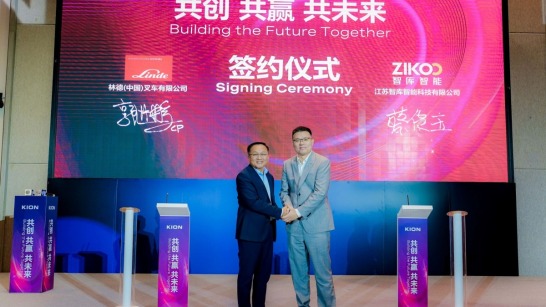
At the 2026 Linde Automation Summit in Xiamen, KION’s brand company Linde Material Handling (China) showcased how software, AI, automated equipment and end-to-end solutions can work together to take intralogistics from standalone automation to system-wide intelligence.
How can companies make their intralogistics operations more intelligent, flexible and autonomous? This question was at the heart of the 2026 Linde Automation Summit, held at the end of October in Xiamen, China.
Under the theme “Intelligent Transformation, Boundless Collaboration,” customers, partners and supply chain experts experienced new technologies and solutions from Linde MH (China). Keynotes, product launches and live demonstrations illustrated how intelligent orchestration can connect equipment, software, data and AI across intralogistics processes.
From individual machines to connected systems
As business requirements change and intralogistics operations become increasingly complex, traditional automation based on predefined processes is no longer sufficient to meet the demands for flexible collaboration and continuous optimization. The focus is shifting toward connecting different technologies, coordinating processes and enabling systems to make increasingly intelligent decisions.
“The core competitiveness of automation is shifting from the performance of individual machines to system coordination, autonomous decision-making and continuous optimization,” said Ching Pong Quek, Member of the Executive Board, Chief Technology Officer and President of ITS Asia Pacific of KION GROUP AG. “The industry is entering a new era of AI-driven intelligent orchestration.”

KION core capabilities for intelligent intralogistics
At the summit, Linde MH (China) presented four KION core capabilities designed to support this transformation. At the center is the software hub KION Intelligent Orchestration System (KIOS), which connects manually operated forklift trucks, automated vehicles, stationary automation equipment and third-party systems within one software architecture, enabling intelligent orchestration and system-wide optimization.
A comprehensive automation equipment portfolio brings these capabilities into real-world applications. Solutions presented in Xiamen ranged from the LiO point-to-point pallet transport solution and six-way shuttle storage systems to robots for narrow aisles and counterbalanced applications, automated loading and unloading, and a humanoid robot featuring embodied intelligence.

Another highlight was PAIOS, the Physical AI Operating System. Physical AI enables machines to move beyond predefined tasks by perceiving their surroundings, responding to changing conditions and acting autonomously. Drawing on NVIDIA’s edge model deployment capabilities and KION’s industry expertise, PAIOS is designed to help automated equipment continuously learn from real operating environments.
The fourth capability is the KION Solutioning Suite, an end-to-end solution platform supporting automation projects from planning and validation through delivery and ongoing optimization. Simulation and digital twin technologies allow solutions to be tested before implementation, helping reduce project risks and improve operational stability.

Automation as a journey
During the “Smart Manufacturing Journey” panel discussion, industry experts, customers and partners explored how companies can successfully navigate their automation transformation. A key takeaway was that automation is not simply about introducing more automated equipment or transforming every process at once. Companies need to start with real business needs, define clear processes and implement automation where automation can deliver measurable value.
This makes flexibility and scalability increasingly important. Manual and automated equipment will continue to coexist in many intralogistics environments, while software and intelligent orchestration can help bring different technologies and processes together.
Looking ahead, automation, software and AI will play an increasingly connected role in intralogistics. As KION continues its transformation into a supply chain solutions company, it will further develop its intelligent orchestration capabilities. The focus will be on practical applications that solve specific business challenges and can be expanded over time as customer needs evolve.

Q&A
AI-driven intralogistics refers to the intelligent coordination and management of internal material and goods flows. By combining AI, software and automated vehicles, companies can make processes more efficient and adapt flexibly to changing requirements.
AI enables intelligent collaboration between vehicles, machines and software systems. It helps coordinate workflows, automate decision-making and continuously optimize processes, improving the overall efficiency and flexibility of intralogistics operations.
Linde MH (China) offers four key areas of expertise: intelligent networking and control through KIOS, a comprehensive portfolio of material handling equipment, autonomous machines powered by Physical AI through PAIOS, and an end-to-end solution platform "KION Solutioning Suite" for planning, implementing and operating automation projects.
Related stories