All Stories
2 min

Flexible Scaling

Automation is no longer the exclusive domain of large companies. Small businesses also benefit from flexible, scalable solutions. In times of labor shortages, rising costs, and fluctuating order volumes, new opportunities are emerging to make processes more efficient, transparent, and error-free.

2026-04-08

Christopher Spies

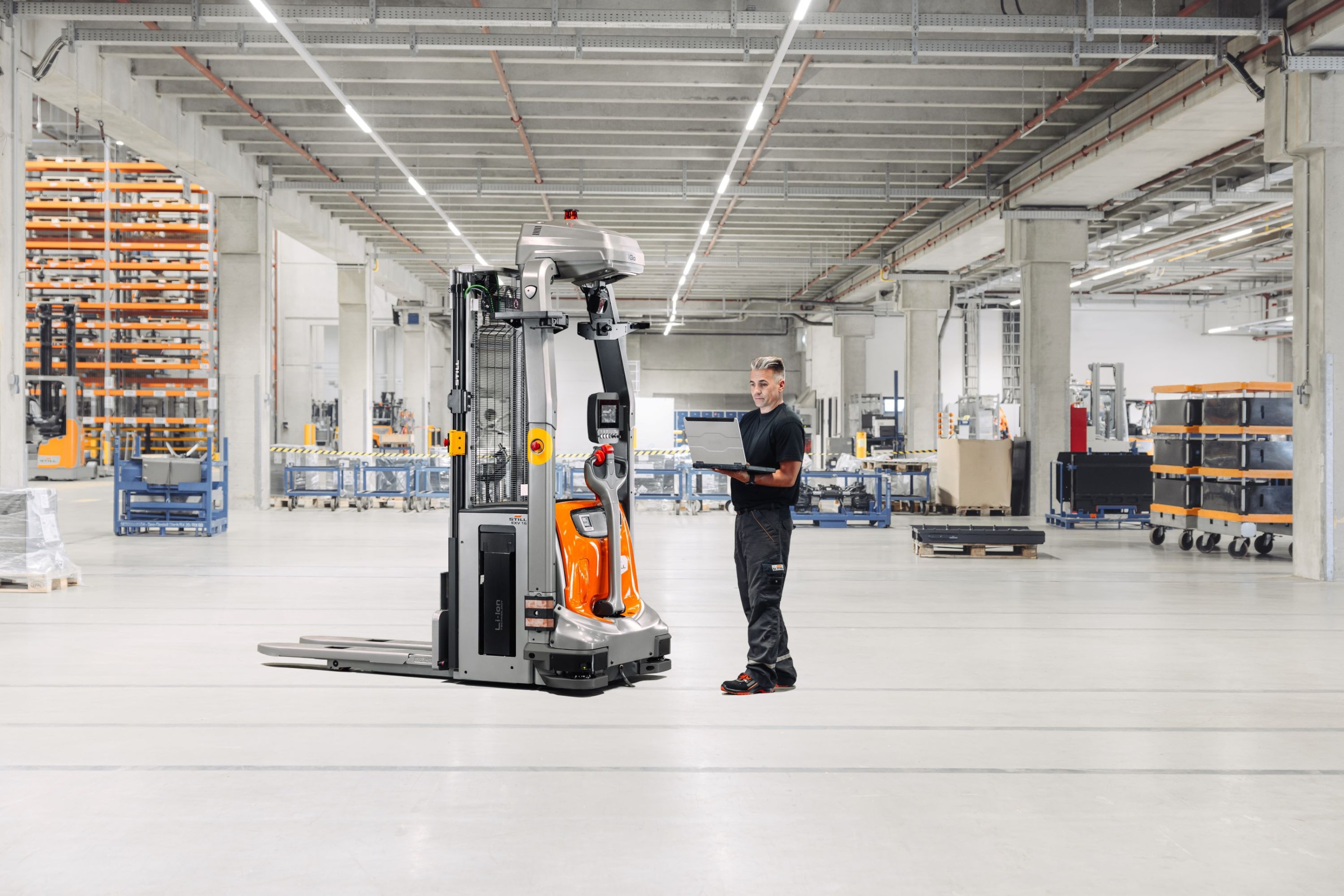
The new EXV iGo automated high-lift truck

Gone are the days when automation only paid off for large distribution centers with high volumes and corresponding investment budgets. Our STILL brand is taking new paths – and these can be scaled flexibly.

Small companies feel the pressure particularly acutely: Orders fluctuate, skilled workers are in short supply, costs are rising. At the same time, processes need to become faster, more transparent and more error-free. Automation is now opening up new room to maneuver in tackling these challenges – often in ways that still surprise even industry insiders.

Myths and Reality

Many myths persist: People often claim that automation is fundamentally too expensive, too complex to plan, and generally only makes sense for new buildings. "That’s not true," says Florian Heydenreich, Managing Director Sales & Service at our STILL brand, and explains: "Automation is now possible even with a small budget and within existing structures." In many cases, a mixed operation of manual and automated solutions is particularly effective.

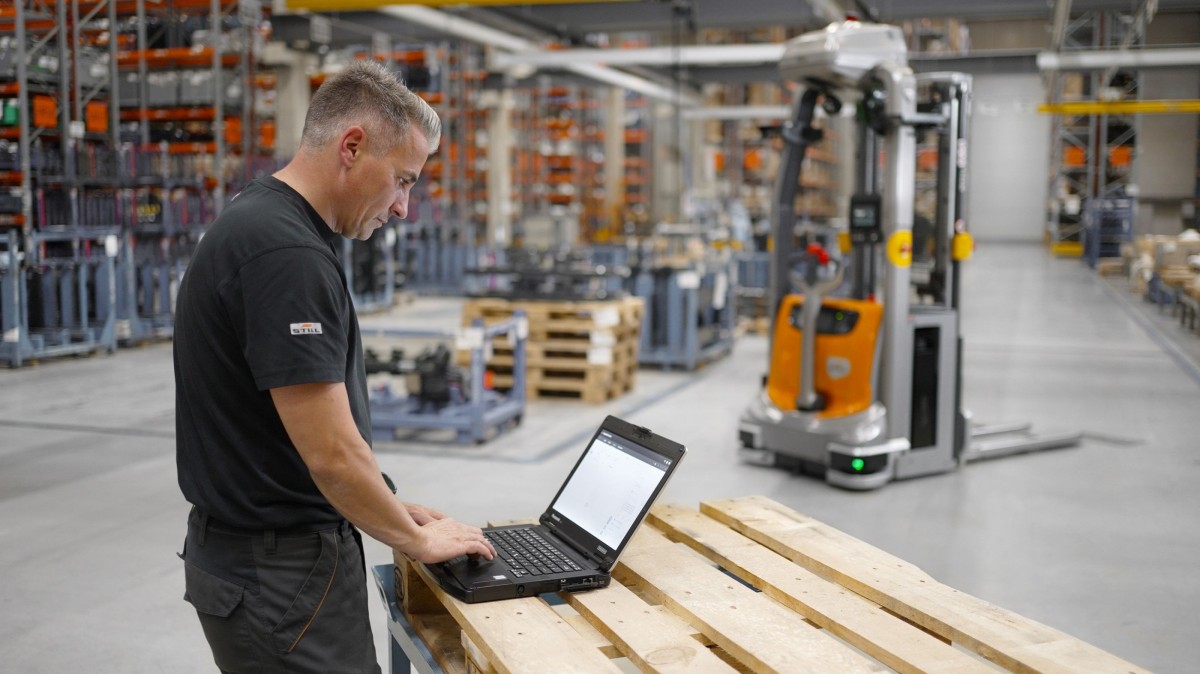
For a smooth yet smart introduction to the world of automation, STILL even has a plug-and-play solution in its portfolio with "iGo easy". It offers a number of advantages:

Automation of clearly defined standard processes: Particularly suitable for recurring, clearly defined material flows such as supply and disposal processes in production.

No integration into existing IT systems required: iGo easy operates autonomously and does not need to be connected to an existing warehouse management system.

Intuitive start-up software: Configuration is carried out via a user-friendly interface – no complex programming is required.

Start with a small fleet: Companies can begin with just a few vehicles and gradually increase the level of automation.

With vehicles such as the automated high-lift pallet trucks AXV iGo and EXV iGo, STILL has also developed trucks that are precisely tailored to the requirements of many small and medium-sized companies (SMEs) – with high cost efficiency, rapid implementation and flexible scalability.

Scale Instead of Replace

iGo easy – the smart way to automate your warehouse.

For Florian Heydenreich, these automation solutions are "an excellent example of how STILL does not drive developments out of technical ambition, but always with a clear focus on the needs of our customers."

A crucial detail for many customers is the option to expand step by step – because the STILL automation solution effectively grows along with its tasks. Anyone who has started with the entry-level version "iGo easy" can, as the project scope increases, switch to STILL’s "iGo systems", which is designed for more complex processes. The vehicles themselves remain unchanged; the software is seamlessly switched from iGo easy to iGo systems.

Structural Stability

iGo easy: the smart plug-and-play solution.

Automation thus becomes a predictable development perspective for small companies. Instead of a large, risky technological leap, a gradual transformation process takes place that protects investments while at the same time leaving room for growth. Automation is therefore no longer a question of the size of the company – but of strategic foresight.

FAQ

Is automation worthwhile for small warehouses?

Yes. For clearly defined, recurring processes, efficiency and process reliability can be measurably increased through automation in intralogistics.

Does a warehouse need to be completely rebuilt for automation?

No. In practical intralogistics, many solutions are implemented in mixed operation: certain routes and routine tasks are automated, while others are deliberately kept manual. STILL’s automation solutions adapt to brownfield environments.

Is it possible to expand automated warehouses?

Yes. If needs grow or processes change, capacity and performance can be expanded and adjusted at a later stage.